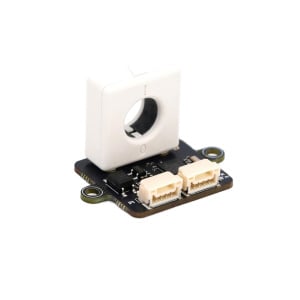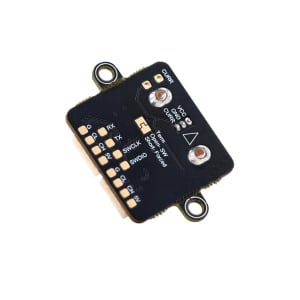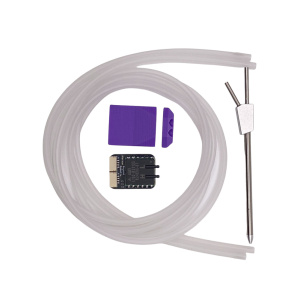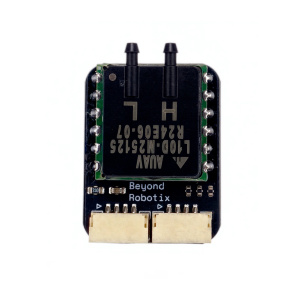

Beyond Robotix Micro CAN Node Development Set with STLINK V3 MINIE

£42.00 Inc. VAT

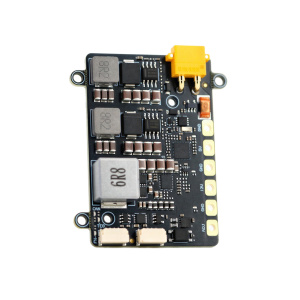
Compact, production-grade CAN node for fast DroneCAN prototyping and PCB integration โ€” plug in sensors today, go from prototype to custom board in minutes.

In stock

0 People watching this product now!
Description

The Beyond Robotix Micro CAN Node allows you to create production-grade DroneCAN enabled products with minimal effort. Whether you’re integrating peripherals on custom PCBs or prototyping new DroneCAN sensors, the Micro CAN Node is the best option for businesses, hobbyists and educational institutes.

Why You’ll Love It

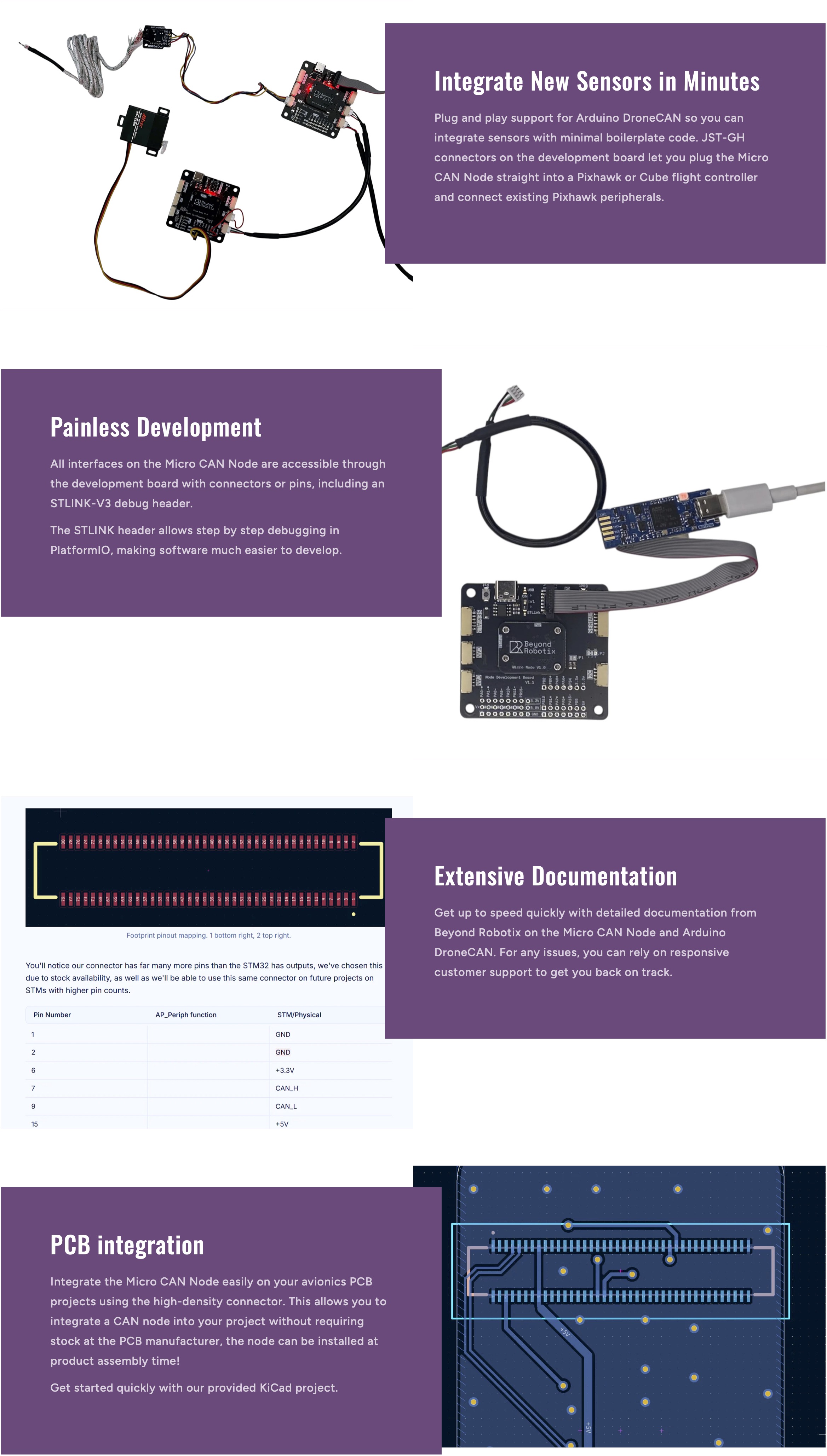
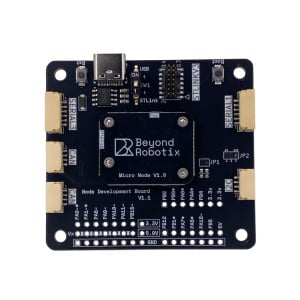
The development board makes it easy to prototype new applications and when you’re ready to get everything integrated on a PCB the high density connector lets you mount the Micro CAN Node with no soldering or messy wires. Plug and Play support for Arduino DroneCAN lets you set up sensors not supported by AP_Periph without mountains of boilerplate code.

This set contains a Development Board, Micro CAN Node and STLINK V3MINE USB debugger and programmer.
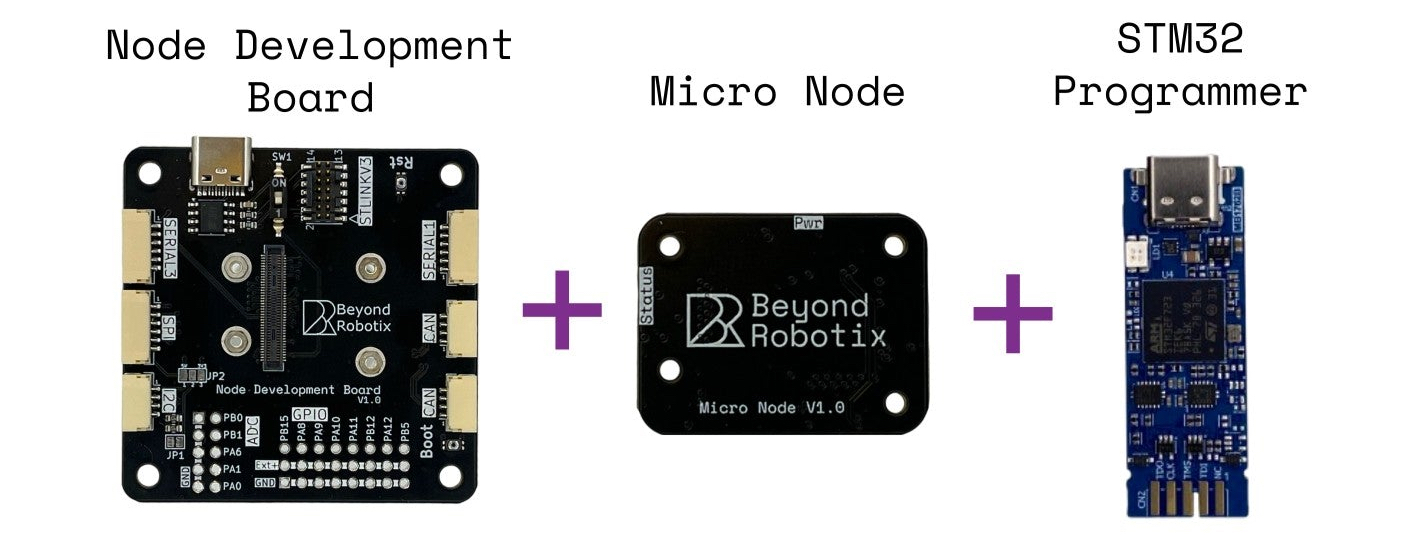
CAN bundleFeatures:

  • Compatibility: Works with AP_Periph and Arduino DroneCAN
  • Connectors: Pixhawk and Cube compatible JST-GH connectors
  • Materials: Durable components built to withstand rigorous use

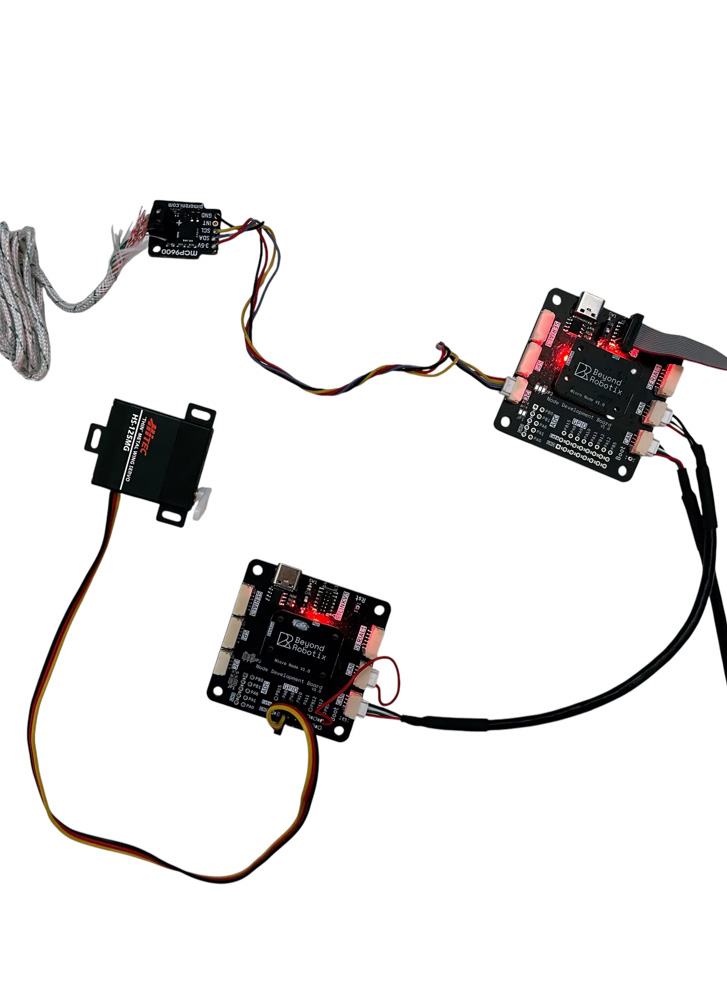
Micro CAN Node sys diagram

Micro CAN Node Development set โ€“ Beyond Robotix Info

Resources

Micro CAN Node Documentation

Development Board Documentation

Arduino DroneCAN GitHub

Arduino DroneCAN Documentation

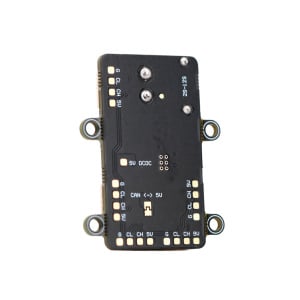
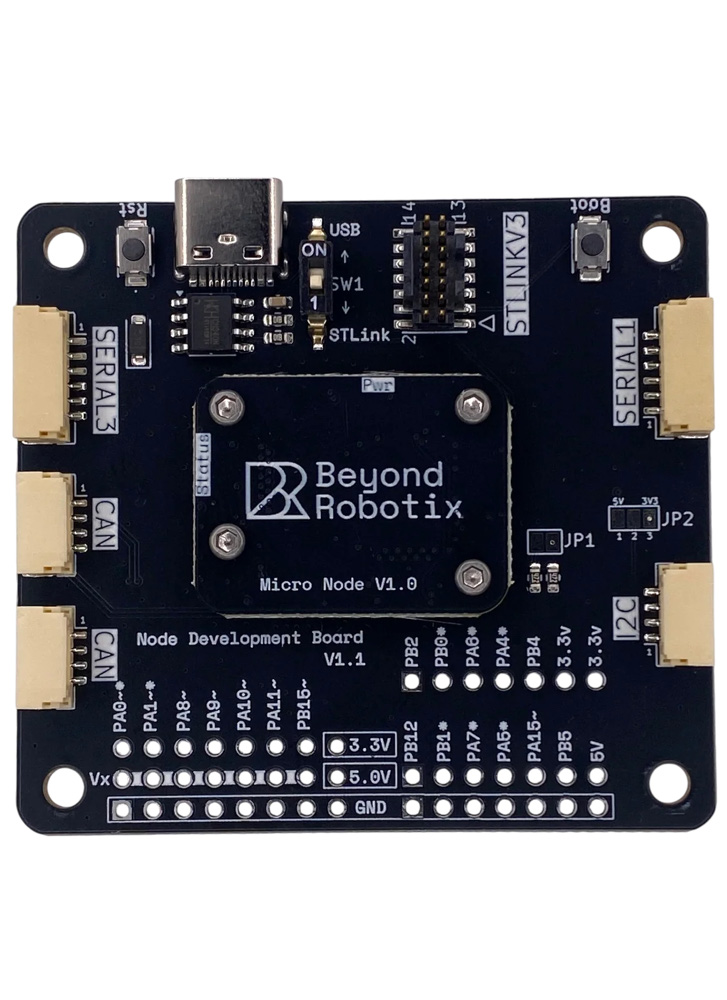
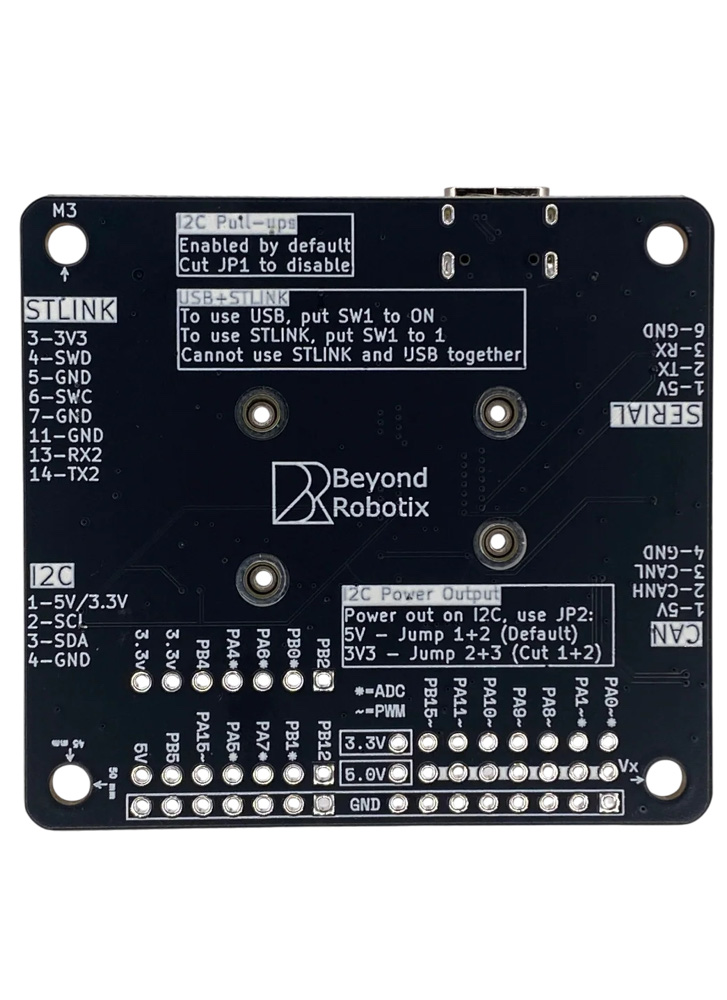
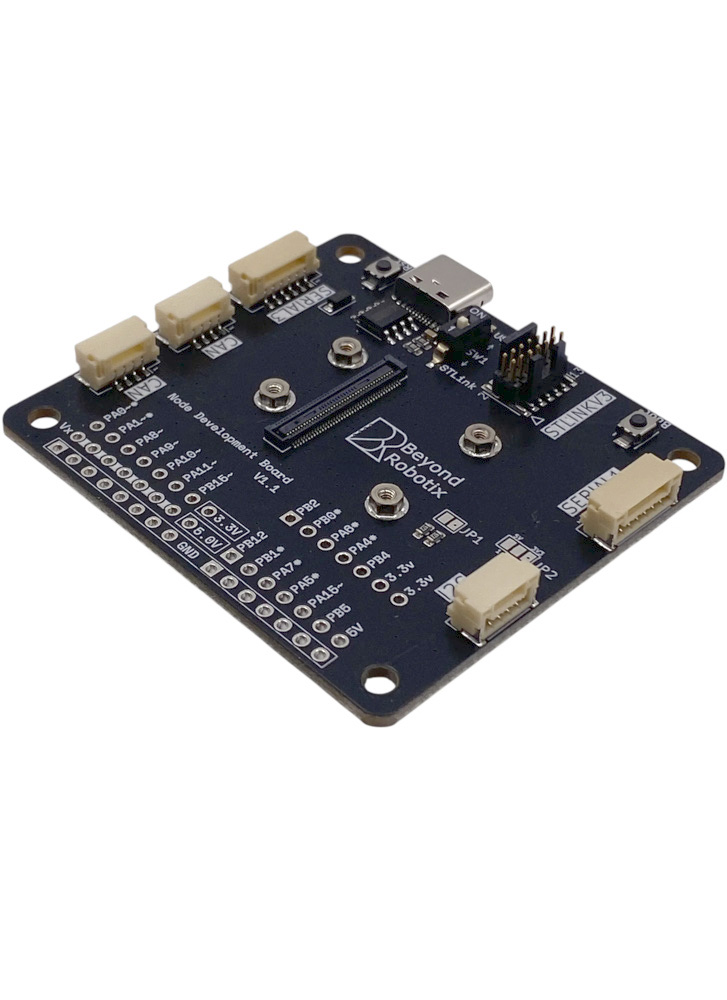
Version: V1.1: V1.1 improves on flexibility for development, exposing more GPIO pins and providing more 3.3V and 5V pin access. The board is slightly bigger to accommodate this change, as such the mounting holes have also moved position. The SPI port is no longer accessible via JSTGH but can be accessed through the GPIO pads instead.

Specification

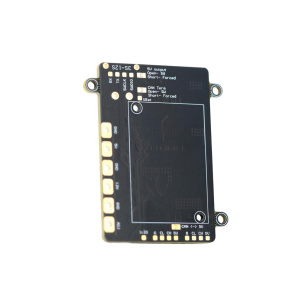
Micro CAN Node

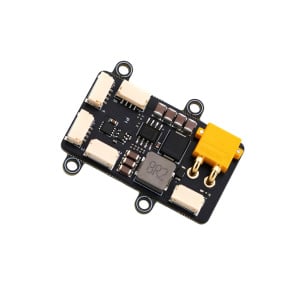
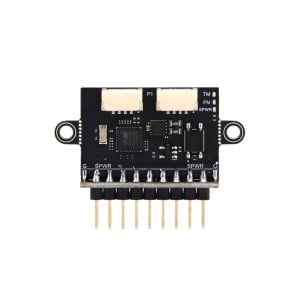
  • Mass: 2g
  • Dimensions: 30x20mm
  • High reliability connector & mechanical fixing
  • Screw heads accessible from the top of the board
  • STM32L431CCU6 processor, 256kB of flash
  • 200mA LDO – Any high power items should not use the 3.3V output
  • 750mA input fuse
  • Input diode
  • Optional 120 ohm termination resistor via solder pad
  • Status LED
  • AP_periph firmware support
  • Arduino DroneCAN support

Development Board

  • Mass: 12g
  • Dimensions: 54x53mm
  • Connectors: JST-GH 6 Pin Serial & SPI, JST-GH 4 Pin CAN & I2C, USB-C Port, STLINK-V3 Debug Header

Included:

  • Micro CAN Node
  • Micro CAN Node Development Board
  • Quick start guide
  • 1 year warranty
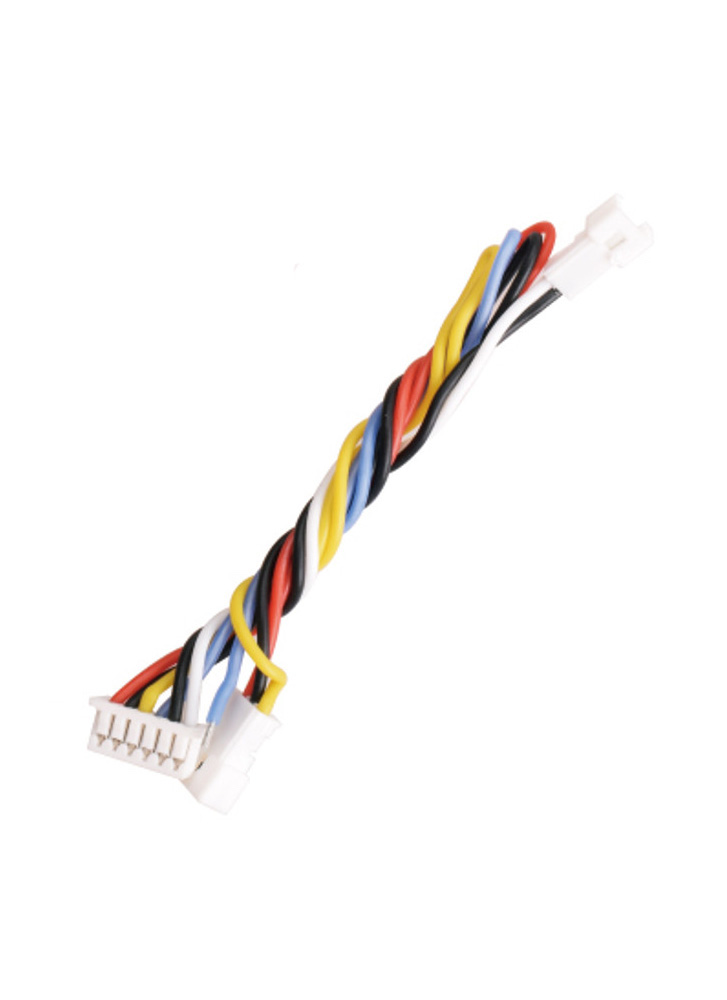
  • Debugger cable to go between STLINK and the board
FAQ
How do I write my own DroneCAN application on my CAN node?
Weโ€™ve created a library called ArduinoDroneCAN which lets you create your own custom programs to communicate with Ardupilot and PX4 via DroneCAN messages very easily. Our abstracts away the internals of DroneCAN so you can get on and just send messages when you want. We have done all the configuration files required for VScode/Platformio for the Micro CAN node which means all you need to do is press upload and youโ€™re away. The repository can be found here: https://github.com/BeyondRobotix/Arduino-DroneCAN?utm_source=FAQ
How to connect custom sensors to Ardupilot using the CAN node
Thereโ€™s a few different ways to connect sensors to Ardupilot, if the sensors are natively supported then AP_Periph can be used with our Micro CAN node. However, if the sensor is not supported or you want to write custom logic for your sensor, you can use our ArduinoDroneCAN software to write a driver to convert the sensor information into DroneCAN messages. The CAN node supports Serial, i2c, SPI and has multiple GPIOs, PWMs and ADC connections. Since our software stack is Arduino based, you can also use Arduino libraries to minimise the time you need to spend coding. The repository can be found here: https://github.com/BeyondRobotix/Arduino-DroneCAN?utm_source=FAQ
How can I allow my project to use CAN and integrate with Ardupilot and PX4?
If youโ€™re creating custom PCBs for your project and need CAN interfaces, our Micro CAN node is designed to minimise time to market for your application. Weโ€™ve done the microcontroller design, documentation and firmware so you can just integrate the high density connector using our KiCAD template, and now your project is CAN enabled. Documentation on CAN node integration: https://beyond-robotix.gitbook.io/docs/can-node-system/micro-node?utm_source=FAQ
Why choose to use DroneCAN for my custom project?
Ardupilot and PX4 support many ways of inputting and outputting data for all types of uncrewed aircraft and ground vehicles. Lua scripts can be used to write device drivers without any extra hardware, and support for scripting in Ardupilot has increased significantly. However, youโ€™re limited to the Lua language which is basic and performance limits can be reached with a few complex scripts running. Scripting is not supported in PX4, which means your solution would not be transferable. Another option is to write your own device driver native for PX4/Ardupilot, however, the implementation would need to be different for each and this requires modifying source files for the autopilot which has licensing issues for Ardupilot and potentially could introduce bugs threatening the autopilot functionality. Re-flight trialing flight firmware can become very time consuming depending on the scale and complexity of your project. MAVLINK can be used in some cases, however not all functionality is not supported through Ardupilot, for example airspeed data cannot be ingested into Ardupilot through MAVLINK messages. MAVLINK would also require a dedicated serial port, which can become limiting depending on the complexity of your project. However, DroneCAN is transferable between both PX4 and Ardupilot and doesnโ€™t require any modification of programs running on the autopilot. This means you can iterate quickly independently of the autopilot. Many functionalities are also supported on DroneCAN from GPS to EFI messages. Ardupilot/PX4 can also command external devices with no modification using servo or relay commands. If there are other devices on your CAN network, such as GPS or airspeed then your new custom CAN device can access these messages and utilise them in your application if wanted. Previously, utilising DroneCAN for your project would have been complicated - however with our Micro CAN node and ArduinoDroneCAN library, you can get going within minutes! https://beyond-robotix.gitbook.io/docs/can-node-system/micro-node?utm_source=FAQ https://github.com/BeyondRobotix/Arduino-DroneCAN?utm_source=FAQ
Q&A

Questions and answers of the customers

There are no questions yet. Be the first to ask a question about this product.

Reviews (0)
0 reviews
0
0
0
0
0

There are no reviews yet.

Be the first to review “Beyond Robotix Micro CAN Node Development Set with STLINK V3 MINIE”

Your email address will not be published. Required fields are marked *

You have to be logged in to be able to add photos to your review.

Shipping

SHIPPING & DELIVERY

We are based in the UK, but ship to most worldwide destinations. Postage rates are calculated by the size/weightย and shipment location. We process orders Monday to Friday and pride ourselves on our quick turnaround of orders - most UK orders will arrive the next day.

We are partnered with several delivery companiesย including Royal Mail, DHL, UPS and Parcel Force. If you have a special delivery requirement or would like to arrange a shop collection pleaseย contact us.

A confirmation email will be sent when your order has been dispatched. If you wish to change your order, please contact us promptly, as we won't be able to make amendments once the order has been shipped.

Calculate shipping price

Please fill in the fields below with the shipping destination details in order to calculate the shipping cost.

Shipping to the UK

  • Order before 4PM for same day dispatch with Royal Mail, 2PM for next day delivery with DHL and 1PM for next day delivery with APC.
  • We offer FREE Shipping on UK orders over ยฃ99, weighing less than 1kg.
  • The courier options deliver Monday to Friday, Royal Mail delivers to residential addresses on Monday to Saturday.

For small low value orders our cheapest delivery service is Royal Mail First Class.ย For a guaranteed next day delivery we recommendย Royal Mail Special Delivery orย one of our courier delivery options.

International Postage

  • Order before 4PM for same day dispatch with Royal Mail.
  • Abitur parturient praesent lectus quam a natoque adipiscing a vestibulum hendre.
  • DHL Express offersย NEXT DAY delivery to most Europeanย destinationsย and a very fast delivery for countries further afield, generally 2-3 days.

Orders shipped outside the EU may be subject to customs charges. These charges are additional to any delivery costs and will need to be paid by the recipient.