


PWM Electronic Relay Switch
Price range: £7.50 through £9.00 Inc. VAT
RC hobbyists often use relays to control high-power devices such as smoke generators & rocket launch systems.
What is a Relay? Relays are electromechanical switches that open and close circuits by receiving electrical control signals from outside sources. For RC related applications, the control signal is PWM provided from a radio receiver, flight controller or device like a servo tester. Relays are particularly useful as they provide electrical isolation between the signal generator i.e. your radio receiver and the device being controlled. This can protect the receiver from potential damage due to voltage spikes or electrical faults in the controlled circuit.
RC hobbyists often use relays to control high-power devices such as smoke generators, lights, rocket launch systems, or other electronic components that require more current or voltage than what the RC receiver or controller can directly handle. Aside from power applications, relays can be used to switch between multiple devices or circuits with a single RC channel. This can be useful for tasks like selecting different lighting configurations, switching between different motors; or triggering auxiliary functions like deploying landing gear, activating camera systems, or releasing payloads in drone or robotics applications.
How to use a relay
A single relay module typically has 6 electrical connections; three connectors for the control circuit and three for the switching circuit.
For the control side there is a PWM signal input connection (S), and power input (+ / -). You would connect your radio receiver to this side of the relay module.
On the switched circuit side of the module, you’ll see the three switched connection points marked NO (Normally Open), COM (Common), and NC (Normally Closed). The relay can be triggered to switch between the NO and NC circuits. The NO circuit will by default be turned off and when triggered will be turned on, while the NC circuit works the opposite and is on by default and turns off when triggered. The Common contact is the switching point of the circuit.
When you want to control power to a device using a relay module, you will have to disrupt its electronic circuit. Any DC device contains two wires that create a circuit. To connect your device to the relay, intersect one of the wires and connect the two open ends to the relay switch. One wire should be connected to the COM terminal and the other to either the NO or the NC switch. Whether you connect to NO or NC depends on whether you want the device switch on or off when the relay isn’t being triggered. For example, say we want to control a light and have the lamp be turned off until we switch it on. We would need to connect the second wire to the NO terminal in this case.
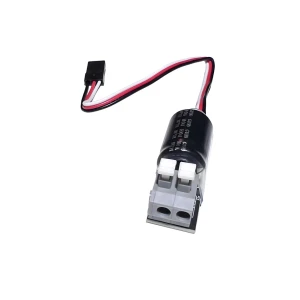
Relay Switch (20A / 14V):
- Support receiver voltage: 5-12V
- Current Rating: 20A
- Voltage Rating: (Switched Side): 14V DC
- Size: 45mmx18mmx15mm
- Weight: 14g
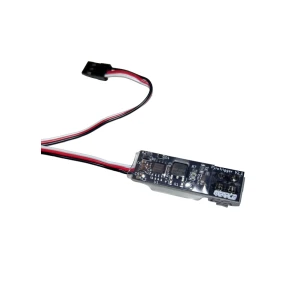
Relay Switch (10A / 30V):
- Support receiver voltage: 5V
- Current Rating: 10A
- Voltage Rating: (Switched Side): 30V DC
Questions and answers of the customers
There are no questions yet. Be the first to ask a question about this product.
SHIPPING & DELIVERY
We are based in the UK and ship to most destinations worldwide.
We dispatch orders during the times shown on our Dispatch Schedule. Orders placed before the daily dispatch cutoff will ship the same day (subject to stock availability). Orders placed after the cutoff will ship on the next scheduled dispatch day.
A confirmation email is sent once your order has been packed. If you need to amend your order, please contact us as soon as possible — once shipped, we’re unable to make changes.
We work with trusted delivery partners including Royal Mail, DHL, UPS, Fedex and Parcelforce. If you have a delivery requirement or would like to arrange collection, please get in touch.


Next Dispatch: Tomorrow
Please fill in the fields below with the shipping destination details in order to calculate the shipping cost.
Shipping to the UK
- Order before the daily dispatch cutoff for same day dispatch.
- FREE delivery available on qualifying orders over £99 (under 1kg).
For small, low-value orders, Royal Mail First Class is our most economical option. Royal Mail Tracked 24 is the most popular choice, offering full tracking and flexible delivery options. For guaranteed next working day delivery, we recommend Royal Mail Special Delivery.
Royal Mail delivers to residential addresses Monday to Saturday, while courier services (including DHL) typically deliver Monday to Friday.
International Postage
- USA orders: Import duties and taxes are prepaid by us — no additional customs charges on delivery.
- Other destinations: Customs duties or import taxes may apply and are the responsibility of the recipient.
Smaller, lower-value orders may be sent via Airmail or tracked postal services. Economy road and express air courier options are available depending on destination. For faster delivery, we recommend express air courier services such as DHL Express, which typically deliver within 1–2 working days across Europe and a few working days for most other destinations.
You may also like…


Related products






Reviews
Clear filtersThere are no reviews yet.